
The short answer
Tequila is a place. Agave is a plant.
Blue Weber agave is the cultivar that made tequila famous. Tequila itself is a protected Mexican denomination of origin: to carry the name, a spirit has to be produced in defined regions of Mexico, under Mexican rules. That protection exists for good reason, and it isn't ours to borrow.
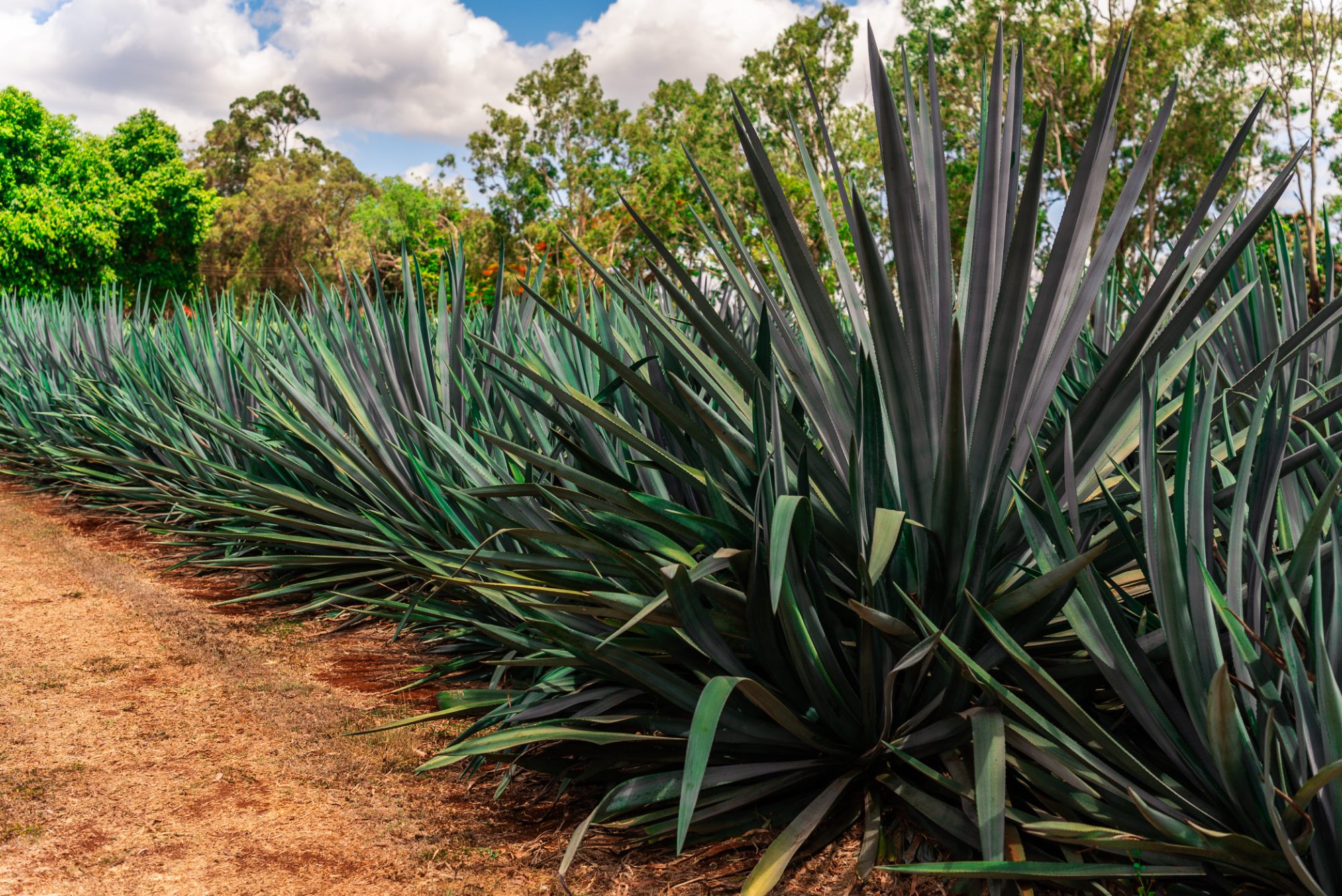
We grow the same plant at 17 degrees south, on the Atherton Tablelands, and make it here. That makes Agave Australis an Australian agave spirit. Same raw material; different country, different rules, different growing conditions, different drink.
Side by side
What's shared, and what isn't
- The plant
- Shared. Blue Weber agave, in both cases. Ours matures roughly six years before it is cut.
- The place
- Different. Tequila comes from defined regions of Mexico. Ours is grown on the Atherton Tablelands and distilled at Walkamin, Queensland.
- The name
- Different, and deliberately so. "Tequila" is legally reserved. We are an Australian agave spirit. No asterisk, no workaround.
- The method
- Learned, then adapted. Pit roasting over volcanic rock is an old agave technique and we owe it to the producers who kept it alive. What happens after — batch fermentation, batch pot distillation, cuts made by palate — is our own.
- The cask
- Only possible here. Rested and Aged mature in reconditioned American oak that held Barossa Shiraz, with a blister char. No Mexican producer is working with that barrel.
None of this is a claim to be better. Mexico has centuries of agave knowledge and a category worth protecting. We're interested in a narrower question: what does blue Weber agave become when it grows in Far North Queensland?
Fair questions
The sceptic's list
Is this Australian tequila?
No. Tequila can only be made in defined regions of Mexico. Agave Australis is an Australian agave spirit made from blue Weber agave grown on the Atherton Tablelands. Anyone selling you "Australian tequila" is misusing the word.
Why grow agave in Australia at all?
Because the Tablelands turned out to suit it. Blue Weber wants heat, drainage and a dry season, and Walkamin gives it all three. The interesting part isn't novelty — it's what six years in this particular ground does to a plant we already know well from somewhere else.
Does it actually taste like tequila?
It reads as agave. Dawn Davies MW, writing in Harpers in October 2025, put it better than we could: "recognizable as agave but it's not Mexico." Cooked agave, pepper and a dry mineral finish are all there; the overall shape of the drink is its own. Judge it in a glass, not against a memory.
Why does agave take so long?
Roughly six years, in our fields, before a plant is worth cutting. Agave stores its energy slowly and only becomes worth harvesting once the piña is fully loaded. There's no way to hurry it, and a bad decision in year one is a bad decision you live with until year six.
What's a piña?
The heart of the plant. Strip the spined leaves off a mature agave and you're left with a dense core that looks like a pineapple — piña. That's the only part that goes to the pit. Everything else is trimmings.
Why pit roast it?
Raw agave can't be fermented. Cooking breaks the plant's stored fructans — inulin — down into sugars that yeast can use. We do it slowly in a volcanic-rock pit, which is the older and harder way of getting there. See the whole process →
What does "volcanic soil" actually mean here?
Something specific and something unproven, and it's worth separating them. The observable fact: the Atherton Tablelands sit on ancient basalt, and our agave grows in that red volcanic soil. The unproven part: exactly how much of what you taste comes from the soil. We're not going to pretend a mineral analysis has been done that hasn't. Terroir is a real thing; it is also the most over-claimed word in drinks.
Why Shiraz barrels?
Ex-bourbon is the global default and we had a more Australian option. Rested spends six months, and Aged two years, in reconditioned American oak that previously held Barossa Shiraz, with a blister char. It's the one part of this that genuinely could not be done anywhere else. Compare the three expressions →
Why does it cost more than a mass-market spirit?
Six years of land and labour before a single bottle exists, a crop cut and trimmed by hand, a pit that has to be built and fired, and batch pot distillation with cuts made by palate. That's the honest answer. We're not going to publish a costing we can't stand behind.
More in the Journal: tequila, mezcal and agave spirit — understanding the language →